Overview
During your year of training, you are expected to master the risks, techniques and indications of structural heart disease interventions. You will undergo a curriculum to develop the judgment and experience necessary to select patients and function as independent operators during interventional procedures in patients with a wide variety of structural heart diseases from young adults with complex congenital heart disease to elderly patients with advanced forms of multivalvular heart disease.
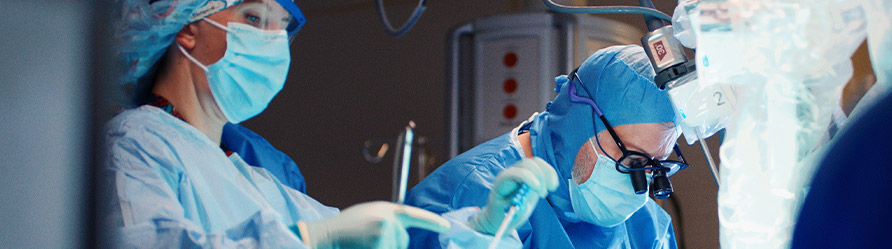
A major component is the performance of procedures in the hybrid operating and cardiac catheterization laboratories. We have six state-of-the-art high-resolution digital fluoroscopy cardiac catheterization rooms and a hybrid operating room. A wide variety of diagnostic interventional procedures are performed in these laboratories including over 1500 coronary and peripheral interventions and over 600 structural heart procedures.
Structural Heart Procedures
- Balloon Aortic Valvuloplasty (BAV)
- Transcatheter Aortic valve Replacement (TAVR)
- Bioprosthetic valve fracture (BVF)
- Transcatheter edge to edge mitral valve repair (TEER)
- Left atrial appendage occlusion (LAAO)
- Transcatheter mitral valve replacement (TMVR)
- Alcohol septal ablation
- Transcatheter tricuspid valve repair (TTVr)
- Transcatheter tricuspid valve replacement (TTVR)
- PFO/ASD closure
- VSD closure
- PDA closure
- Assessment of Fontan circulation
- Transcatheter Pulmonary Valve Replacement (TPVR)
- Transcatheter treatment of coarctation of the aorta
- Hemodynamic evaluation of complex valvular heart disease
- Interventional Heart Failure: Interatrial shunting and coronary sinus interventions
- Complication Management
Mechanical Circulatory Support