
Learn More About Our Program
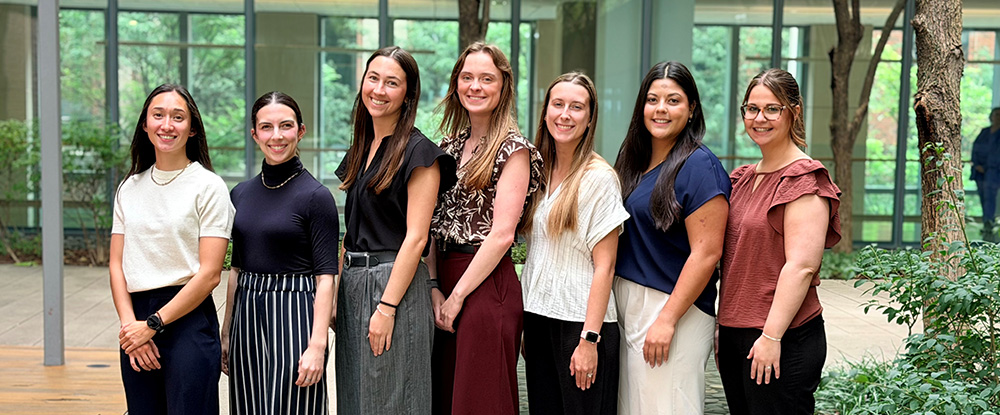
Read the answers to these frequently asked questions about our PGY1 Pharmacy Residency program, or contact us below for any additional questions.
Find answers to frequently asked questions about our PGY1 Pharmacy Residency program.


Read the answers to these frequently asked questions about our PGY1 Pharmacy Residency program, or contact us below for any additional questions.


Yes, the PGY1 Pharmacy Residency program is ASHP accredited and received a full 8 years of re-accreditation in 2018.
There are 4 PGY1 positions.
There are seven traditional month-long required learning experiences: ambulatory care, cardiology, critical care, clinical pharmacy management, emergency medicine, antimicrobial stewardship, and internal medicine. Ambulatory care, cardiology, and critical care are considered selective rotations in that the resident may choose between several options that meet the requirement. The selective options include medical resident clinic, primary care, cardiology clinic, or oral oncolytic clinic for ambulatory, general cardiology or heart failure for cardiology and medical ICU or cardiovascular ICU for critical care.
There are also several required longitudinal experiences including pharmacy practice management, research, pharmacy services, management of medical emergencies, and education and communication. Residents are also required to complete a one-month orientation period in July.
The residency provides for three months of elective learning experiences which are typically scheduled in the second half of the residency year unless the resident has a particular elective they would like to complete prior to Midyear.
Prior to the start of the residency year, the resident will complete a questionnaire that includes rotation interests, and a preliminary schedule of required rotations will be prepared by the Residency Program Director. In general, electives are scheduled but not chosen until the second half of the year unless the resident has a specific area of interest they would like to have experience in prior to Midyear
The resident will be engaged in a number of different ways to disseminate medical information to a variety of audiences. Formal presentations include 2 Pharmacy Grand Rounds presentations and a Therapeutic Controversy. Additionally, the resident will complete informal teachings such as medical resident teachings, nursing inservices and topic discussions with pharmacy students.
Yes, as a resident you will be a member of rounding teams on various required and elective rotations including internal medicine, general cardiology, heart failure, medical ICU, cardiovascular ICU, and palliative care.
Yes, medical emergency training is a longitudinal component of the residency program.
Yes, the pharmacy residents will attend the ASHP Midyear meeting and a regional resident conference.
The Christ Hospital will reimburse the pharmacy residents for travel to the ASHP Midyear meeting and to the regional resident conference.
Residents have the option to complete the University of Cincinnati College of Pharmacy Teaching Certificate Program. This program will provide them with a broad understanding of issues in pharmacy education and opportunities to enhance their teaching skills. It has been constructed for residents to gain knowledge in educational theory, develop experience in teaching in various instructional settings, and document and reflect upon their teaching activities. An academic elective is also offered for additional experience in academia. Residents also participate in the precepting of pharmacy students on rotation at The Christ Hospital.
Residents are paired with a mentor of their choosing, who serves as an additional go-to person for questions and support, outside of the residency program director. Key areas focused on include: guidance on projects, elective rotation selection, time management, professional interpersonal relationships, career opportunities after residency, and any other residency-related issues that may arise.
Yes, you are required to be licensed within 90 days after the start of the residency however licensure is encouraged as soon as possible.
Yes, we participate in the match.
Please refer to PhORCAS for application deadline each year.
The Christ Hospital residency program utilizes the PhORCAS system to manage application materials. All materials need to be uploaded and submitted through PhORCAS.
Yes, an on-site interview is required. Our interviews typically last about 6 hours and provide the applicant with the opportunity to meet and interact with the program director, preceptors, and current residents. A brief presentation will be required of each interviewee.
Interviews usually take place during the last week of January through the last week of February.
The Residency is a 12-month commitment and begins in late June, the exact date to be determined each year, and runs through June of the following year.
The stipend for the 2026-2027 residency year is $64,000 and is evaluated annually.
The resident is required to staff approximately every 3rd weekend, 2 holidays , and 2 weekdays in December. Staffing consists of working in the central pharmacy and performing both unit dose and IV room responsibilities in addition to clinical consult responsibilities.
The resident is provided 10 days of vacation/sick time, 5 holidays off, and 4 interview days.
Yes, the Residency is showcased at the ASHP Midyear Meeting.
Upon hire, all hospital employees must pass a drug and nicotine screen in order to be employed by The Christ Hospital.
Yes, we have a PGY2 Cardiology Residency, a PGY2 Internal Medicine Residency, and a PGY2 Ambulatory Care Residency.