

Every birth story is unique, shaped by personal circumstances, medical decisions, and the relationships built along the way.
For Claire Traynor, both of her pregnancies led to planned Cesarean (C-section) deliveries. These choices were made through thoughtful conversations, careful planning, and a strong partnership with her physician.
What began as a patient-doctor relationship quickly grew into a foundation of trust that helped guide her through two life-changing experiences.
Throughout both pregnancies, Claire worked closely with Jennifer Demos-Bertrand, DO, an Obstetrics and Gynecologist with The Christ Hospital Physicians- Obstetrics & Gynecology to understand her options and make the decisions that felt right for her and her family. From navigating a low-lying placenta during her first pregnancy to discussing delivery options for her second, Claire felt supported every step of the way.
Their shared commitment to open communication and compassionate care not only resulted in two successful deliveries but also fostered a lasting relationship that continues today.
Claire’s Story
Claire: I didn’t have a vaginal delivery with either one of my children. I had planned C-sections with both.
Dr. Demos-Bertrand: Everything in obstetrics and gynecology is very personal. We’re talking about very vulnerable situations. We’re talking about sensitive topics. And patients need to trust you.
And if you don’t have that good relationship, you’re not going to have the best outcomes because the patient’s always going to be skeptical.
But with Claire, we bonded right away and ultimately it has led to this amazing relationship with her family and myself.
Claire: The first time around I had a low-lying placenta, so having a vaginal delivery was never really an option.
We talked about having a C-section early on and had long discussions about how secure and comfortable I was going to be in that situation.
The second time around with my son Duncan, we had a lot of conversations again about, you know, the potential to v-back and the pros and cons of both. I felt so secure with how the delivery went the first time that I knew I wanted to do it a second time.
Dr. Demos-Bertrand: Her repeat C-section went great.
I love delivering someone more than one time. It’s just fun to be there during this pivotal moment where their family is growing.
Claire: I remember it was 11:00 at night after I had my surgery, and she just sat with us at 11:00, 11:30 at night and hung out. We just chatted and I knew that everything was going to be okay.
Where we are, we’re safe, she’s here, she’s aware, and she cares about us. That was really important.
Dr. Demos-Bertrand: It’s a lot of unknowns and it’s scary and nerve-wracking. We’re here to hold your hand through the entire process for pre-ops, the day of surgery, and then post-op as well.
Claire: Because we have created such an amazing friendship, we still get to see her outside of doctor’s appointments, just as friends from time to time.
So now, we have two beautiful children. Aurora is about to be six, and Duncan is about to be two.
But life is wonderful. We’ve had the best experience and wouldn’t change it for the world.
Frequently Asked Questions About Planned C-sections
Q: What factors typically lead to a planned Cesarean delivery?
A:There are a few reasons a planned cesarean may be necessary including placental location, previous uterine surgeries (including c-sections or fibroid removal), position of the baby and even patient preference.
Placenta previa (where the placenta covers the cervix) or a low-lying placenta are reasons a c-section is necessary. Having had a prior c-section doesn’t necessarily mean that a repeat cesarean is required, but there are factors that will play into the OBGYN’s recommendations including reason for previous c-section, type of uterine incision, and overall pregnancy risk factors. The position of the baby is also important.
If the baby is not head down, this means the baby is either breech (feet or bottom down) or transverse (sideways). There may be other options to see if the baby can be turned manually during a procedure called external cephalic version. In the case of a persistent breech or transverse baby, a cesarean section will be necessary. There are also some moms who desire scheduling a c-section even if there isn’t a medical reason to do so. Patient autonomy is very important at The Christ Hospital, and your provider will go over risks and benefits of all options.
Q: What can patients expect during a planned C-section?
A: On the day of surgery, the patient will check in a few hours prior to the scheduled surgery time. The patient will be admitted, get an IV, answer some questions, and then head back to the operating room.
In the operating room, a spinal block will be placed by an anesthesia provider. A spinal block is similar to an epidural but is meant for surgery; the patient will not be able to move the bottom half of their body or feel any pain but will remain awake. The abdomen will be prepped with a surgical preparation, a catheter will be placed in the bladder, drapes will be placed, and the surgery will begin.
Once surgery starts, it will usually be just a few minutes before the baby is born. The patient will likely feel some pressure during the surgery, specifically as the doctor delivers the baby. Here at the Christ Hospital, we can do things like listen to music, delayed cord clamping, utilizing a clear drape, and skin to skin with the baby and mom if desired. The total time in the operating room is about 1 hour. The remainder of the surgery is spent closing all the layers with stitches. Once surgery is over, the patient and the baby go back to the room for recovery. Most families go home 2 or 3 days later. The total healing time for patients is usually 6 weeks.
Q: What are the risks and benefits of a repeat C-section?
A: Some Benefits Can Include:
- Predictability
- Avoid Labor Risks
- No Pushing or Pelvic Trauma
Some Risks Can Include:
- Longer Recovery
- Scar Tissue
- Placental Problems
- Surgical Complications
Q: What role does patient preference play in determining a birth plan?
A: At The Christ Hospital Health Network, patient preference drives your birth experience. Your care team treats your birth plan as a guide to birth preferences, prioritizing your choices for pain management, birthing positions, and environment, while ultimately remaining flexible to ensure the medical safety of both you and your baby.
Featured in This Post
Tags
Expert
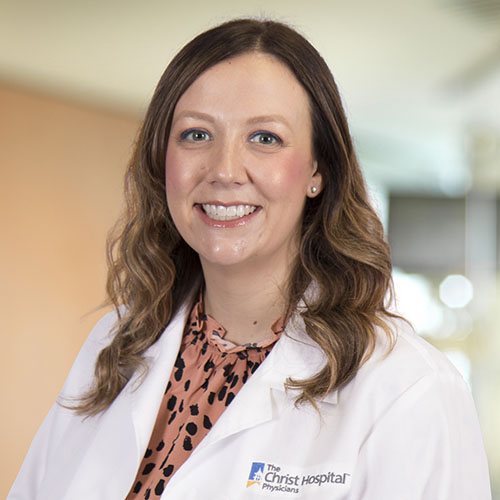 Jennifer M. Demos-Bertrand, DO
Obstetrics & Gynecology
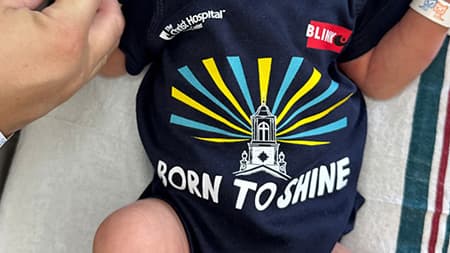 Newborn babies at Christ Hospital to receive BLINK inspired onesie Thursday - opens in a new tab - external linkNewborn babies at Christ Hospital this week will be welcomed into the world with a little bit of extra BLINK spirit! Every baby born on Thursday at Christ's birthing centers will receive a special "Born To Shine" onesie to mark the start of the 2026 BLINK festival.
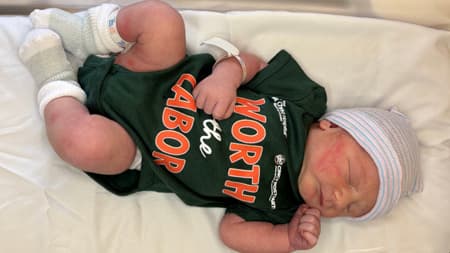 'Worth the labor': Babies born at Cincinnati hospital on Labor Day get special onesie - opens in a new tab - external linkBabies who are born on Labor Day at Christ Hospital will get a special gift. They'll get onesies that say "Worth the Labor" at both the Mt. Auburn and Liberty birthing centers - the latest in the series of exclusive onesies given on special days of the year.
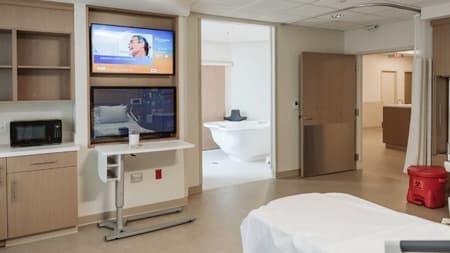 New rooms are open in Family Birthing Center at Christ Hospital Liberty Twp. - opens in a new tab - external linkThe expansion of the Christ Hospital Medical Center in Liberty Twp. Family Birthing Center added 8,800 square feet of space at a cost of $13 million. It brings the total number of labor/delivery and postpartum rooms to 14.
- The Christ Hospital Expands and Enhances Mt. Auburn Birthing CenterThe Christ Hospital offers delivery award-winning labor & deliver services at our Liberty Township and Mt. Auburn birthing centers—and we're expanding. Q102's Fritsch gives a first look.
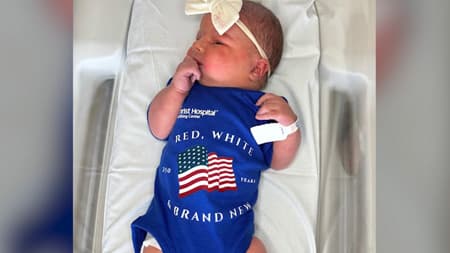 New parents can celebrate holiday with special onesies at Cincinnati hospital - opens in a new tab - external linkAll babies born on Independence Day at The Christ Hospital’s Mt. Auburn or Liberty birthing centers will receive a limited edition Red, White, and Brand New onesie to celebrate the holiday.
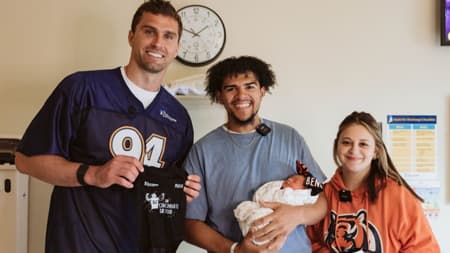 Former Bengals player Sam Hubbard's foundation gives Father's Day gifts at local hospitals - opens in a new tab - external linkhe Christ Hospital Health Network has partnered with former Cincinnati Bengals player Sam Hubbard's Foundation. Hubbard is a soon-to-be first-time father and is celebrating Father's Day at local hospitals.
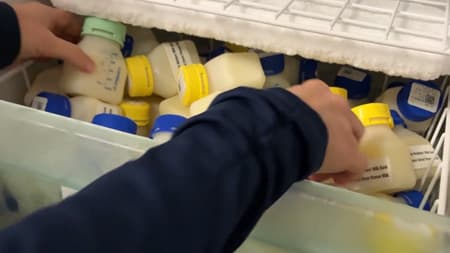 Christ Hospital expands donor breast milk dispensary at local birthing center - opens in a new tab - external linkNew mothers who want to breastfeed but need short-term help can now access donated breast milk through an expanded program at Christ Hospital’s Liberty Township birthing center.
