


As a standout soccer player, Elise Haller has always known how to play through adversity and pain. But a torn ACL during her junior year of high school sidelined Elise, and her persistence was tested by a long painful journey toward feeling like herself again. But she finally found her answer, and relief, after an unexpected turn that led her to Christopher Paprzycki, MD, a vascular surgeon with The Christ Hospital Physicians – Heart & Vascular.
An unexplained pain
By all accounts, the surgical repair of Elise’s ACL was a success, and initial post-surgery rehabilitation went well. But as she ramped up her physical activities to prepare for her senior season, something wasn’t right. She developed an intense pain in her calf below the repaired knee, especially during extended rigorous activity.
“It felt like a severe burning sensation,” Elise says. “It wasn’t normal soreness from training. It would happen while I tried to play or work out.”
Elise met with her orthopedic surgeon. An MRI confirmed the ACL repair was intact and tests showed no obvious physical issues from the injury or the repair. She began further therapies and treatments to support healing, and she worked closely with athletic trainers on continued rehabilitation. But the pain persisted.
Elise got a second opinion from another orthopedic surgeon in hopes of finding clarity. But more tests confirmed that the repair was successful. Everything looked fine.
Elise knew it wasn’t.
Playing through the pain
Soccer has been an important part of Elise’s life from an early age. Her senior season would be her last chance to play with teammates and friends that she’d played with for years. So, with confirmation that her ACL was healed, she decided to play through the pain one last time.
“It hurt to play,” she says. “But it was my senior year. I wanted to be there for my school and my teammates, so I pushed through it, but that took a lot.”
Following her senior season, her activity level subsided, so Elise put continued treatment on the backburner and looked ahead to college.
A New chapter – a familiar pain
The following fall, Elise began college at The Ohio State University. The especially large campus meant a lot of walking. She tried to rejoin competitive sports such as volleyball with her friends. But the increased activity brought back pain, along with a feeling of fatigue in her leg.
“I could walk normally,” Elise explains. “But if it was for an extended period of time, the burning came back, and my leg felt extremely tired.”
While home from school, Elise went for a walk with her mom, Melissa. When Elise had to stop because of the pain, Melissa knew something still wasn’t right.
“You have to go back and have this looked at again,” Melissa told her.
But Elise had been through enough appointments and tests only to be told she was fine. She wasn’t exactly encouraged by the prospect of going through more, so she pushed back at the idea. Thankfully, Mom persisted.
“She’s always been a high‑performing athlete. Now she could barely walk across campus,” Melissa says. “As a mother, you hate seeing your child pushed to the point of exhaustion by something nobody can explain.”
A third opinion – and a critical clue
Elise gave in and saw a third orthopedic surgeon who examined her knee and confirmed the earlier tests that showed her ACL was fully healed. But he suspected that her pain and fatigue could be due to something beyond the musculoskeletal system.
He ordered an ankle-brachial index test - a simple, noninvasive test that measures blood flow. The test showed abnormal circulation to her lower leg, which meant that the pain and fatigue may have been caused by a circulation problem. He referred her to Dr. Paprzycki.
Finding the answer – at last
Vascular testing revealed an occlusion of the popliteal artery. This serious condition is extremely rare in patients as young and healthy as Elise. Dr. Paprzycki says that the blockage may have been related to her original ACL injury and repair, but there was no way to confirm it. In some cases, it can be caused by congenital conditions.
He explains that smaller blood vessels had naturally formed to bypass the blockage in Elise’s leg. However, those didn’t allow enough blood to reach her lower leg, causing pain and fatigue when forced to supply the amount of blood needed during extended rigorous activity.
“It’s like your legs run out of gas,” he says. “No matter how hard you rev the engine, you can’t push enough through.”
A Complex surgery, a skilled team
According to Dr. Paprzycki, a surgical bypass for a blocked popliteal artery requires a great deal of precision in a confined area. The surgery typically takes a few hours. But when he and his team began the procedure on Elise, they found conditions that made her case particularly challenging.
The damage caused by the prolonged lack of blood was extensive. Not only was the artery completely blocked, but the tissue was severely weakened to a consistency that Dr. Paprzycki compares to wet tissue paper.
Due to the added complexity, Elise’s surgery took seven hours to complete. Dr. Paprzycki even called on additional surgeons from The Christ Hospital Physicians – Heart & Vascular to assist during portions of the procedure.
Dr. Paprzycki and his team completed the bypass using a vein taken from Elise’s calf to create a new path for blood circulation.
The road to recovery
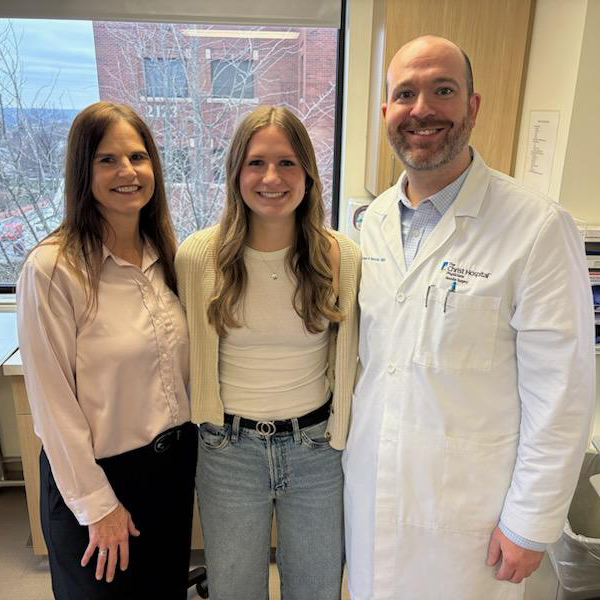
“Every single person I encountered was great,” she says. “They joked with me about not having many patients my age and made me feel welcomed and cared for.”
Melissa feels the same gratitude.
“It’s disheartening to be told she was fine when you know she’s not,” Melissa says. “We’re grateful for the doctors who didn’t give up.”
Recovery wasn’t quick or easy for Elise. Especially considering the delicate nature of a vascular bypass with the added complexities of her procedure.
Initially, Elise had to walk with crutches and gradually rebuild the strength in her leg while the repaired artery healed over time. But she’d waited this long, so she approached her recovery with the same determination she’d always shown on the soccer field.
“She’s an amazing young woman with fantastic parents completely on her side,” Dr. Paprzycki says. “It’s incredible to see her thriving now.”
Back in the game – with a hat trick
Two years after surgery, Elise was released from Dr. Paprzycki’s care. She celebrated the best way she knew how – by lacing up her cleats.
After what seemed like an eternity on the sidelines, Elise returned to the game she loves and played in a recreational soccer game. She scored three goals.
“I was nervous at first,” she says, “because I’d been in pain for so long and I felt like one little accident could start it all over. But everyone was just playing for fun and eventually so did I. It felt great to enjoy the game again.”
The importance of listening to your body
Elise’s experience is an important reminder to trust your instincts and look for answers when your body continues to tell you something is wrong. It doesn’t matter how young or healthy you are.
“You know your body better than anyone,” she says. If something feels wrong and you’ve been told it’s fine, don’t be afraid to get a second—or even a third opinion.”
Dr. Paprzycki agrees. He encourages anyone experiencing unexplained or persistent symptoms of any kind to advocate for themselves.
“Doctors are a product of our own experiences and training,” he says. “Someone else may have seen something similar to what you are experiencing. Sometimes that fresh set of eyes can make all the difference. If nothing else, a second opinion can provide reassurance when your original diagnosis and plan is the right one.”
Featured in This Post
 Christ Hospital launches CRISPR gene-editing trial for patients with high cholesterol - opens in a new tab - external linkPatients who haven’t been able to control high cholesterol with standard medications may be eligible for a new clinical trial at The Christ Hospital that uses gene-editing therapy in an effort to reduce the risk of heart disease.
 Local mom with lifelong heart condition grateful for second chance after transplant - opens in a new tab - external linkLiz was diagnosed with cardiomyopathy when she was 9 years old, and her condition eventually worsened to the point that everyday tasks became difficult — until a heart transplant in 2024 gave her what she calls a second chance.
 The Christ Hospital Health Network Recognized for Excellence in Life Support - opens in a new tab - external linkThe Christ Hospital Health Network was named a Gold Level Center of Excellence in advanced cardiopulmonary life support by the Extracorporeal Life Support Organization (ELSO) for utilization of ELSO guidelines for Extracorporeal Membrane Oxygenation (ECMO) Centers and Training Education.
 Courier's 2026 40 Under 40 winners step into the spotlight - opens in a new tab - external linkThe Cincinnati Business Courier held its annual celebration for the 40 Under 40 list for 2026. This year's list includes Cardiac Surgeon Saad Hasan from The Christ Hospital Health Network.
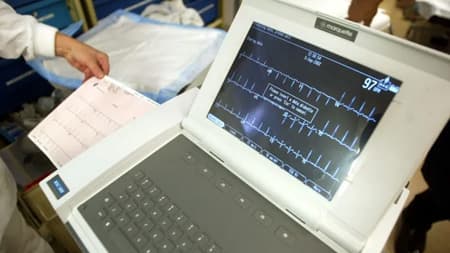 AI EKG Tool Authorized by FDA Aims to Flag Heart Attacks That Standard ST-Elevation Criteria Can Miss - opens in a new tab - external linkThe Food and Drug Administration has authorized an artificial intelligence model that reads a standard 12-lead EKG and flags signs of the most urgent heart attacks, including patterns that conventional EKG criteria can miss. The decision targets a known gap in emergency heart care.
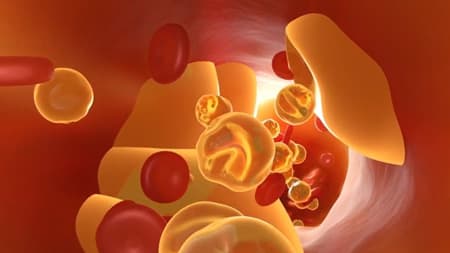 The Christ Hospital seeks volunteers for single-shot treatment that may fix high cholesterol - opens in a new tab - external linkThe Christ Hospital is recruiting volunteers for a clinical trial of a cholesterol treatment that researchers say could genetically fix high cholesterol — potentially for life. Dr. Dean Kereiakes is leading the study of a single injection that changes a patient's genetics to reduce high cholesterol.
 More Than “Go Juice”—Coffee Can Help Your HeartGood news for coffee lovers! Recent guidance from the American Heart Association says your daily cup, or cups, of Joe may actually provide several heart-protective benefits. Here’s what you need to know.
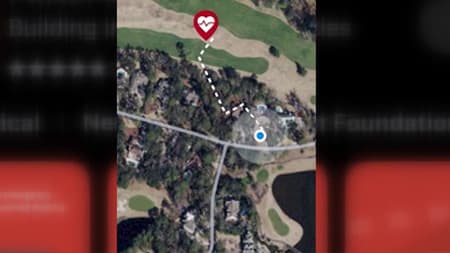 Hamilton County rolls out app that turns bystanders into cardiac arrest responders - opens in a new tab - external linkHamilton County is rolling out new app called PulsePoint that is designed to turn everyday citizens into first responders during cardiac emergencies. It notifies users who have indicated they are trained in CPR and willing to help when a possible cardiac arrest is reported in a public place.